
Biodiversity
Wildlife Found Within the Royal Tiger Reserve
The Reserve is a protected forest landscape for a significant number of vulnerable wildlife species, including the critically endangered Malayan tiger, with fewer than 150 remaining in Peninsular Malaysia.
It also supports key tiger prey species such as sambar and barking deer, wild boar and the Malayan gaur (Seladang), all essential to sustaining a viable Malayan tiger population.
Beyond this, the forest is home to the Malayan tapir, Asian elephant, Asian dhole, and dusky leaf monkey, as well as over 380 bird species. These include the helmeted hornbill and the crestless fireback pheasant, both rapidly declining due to habitat loss across Malaysia.
A recent wildlife survey found signs of six of the seven felid species native to Peninsular Malaysia present within the borders of The Reserve.
The reserve also includes Asian elephant, Malayan tapir, Dhole, White-handed gibbon, Pig-tailed macaque, Dusky leaf monkey, and 380+ bird species, including the critically endangered helmeted hornbill and crestless fireback.
Bird
Species
Wild Cat
Species
Altitude
Range
The reserve also includes Asian elephant, Malayan tapir, Dhole, White-handed gibbon, Pig-tailed macaque, Dusky leaf monkey, and 380+ bird species, including the critically endangered helmeted hornbill and crestless fireback.
380
Bird
Species
6
Wildcat
Species
1500m
Altitude
Range
A Refuge for Threatened Species
ASARTR is home to six of Malaysia’s seven wild cat species, including the Malayan tiger, Sunda clouded leopard and Asiatic golden cat. Its vast forests provide vital habitat and hunting grounds for these elusive predators, making the reserve an important stronghold for their conservation.
Malayan tiger

Malayan tiger
(Panthera tigris jacksoni)
- Malaysia's national animal, found nowhere else in the world but the Malay Peninsula.
- Critically Endangered — fewer than 150 remain in the wild.
- Can weigh over 120kg and measure more than 2.5m from nose to tail.
Leopard

Leopard
(Panthera pardus)
- One of Peninsular Malaysia’s largest wild cats, the leopard is a powerful, elusive forest predator.
- Melanistic leopards, or black panthers, have dark coats with rosettes visible in certain light.
- Adaptable hunters of many mammals, they help keep forest ecosystems in balance.
Clouded Leopard
Clouded Leopard
(Neofelis nebulosa)
- Named for its cloud-shaped markings, this elusive wild cat lives in Peninsular Malaysia’s tropical forests.
- A superb climber, it uses powerful legs, large paws and a long tail to balance in trees.
- Habitat loss, fragmentation and poaching make connected forests vital to its survival.
Marbled Cat

Marbled Cat
(Pardofelis marmorata)
- This small, elusive wild cat is named for the marbled coat that helps it blend into the forest.
- Built for life in the trees, it relies on its long tail for balance in the canopy.
- Rarely seen and little studied, it shows why intact forests and further research matter.
Asiatic Golden Cat
Asiatic Golden Cat
(Catopuma temminckii)
- A medium-sized wild cat of Peninsular Malaysia’s forests, known for its striking range of coat colours.
- Its coat varies from golden or reddish-brown to grey or dark brown, sometimes spotted.
- It hunts small mammals, birds and reptiles, but faces threats from habitat loss and hunting.
Leopard Cat

Leopard Cat
(Prionailurus bengalensis)
- This small, mostly nocturnal wild cat lives in Malaysia’s forests and even plantations.
- Its slender body, rounded ears and black spots make it look like a miniature leopard.
- Feeding on rodents, birds and other small animals, it helps keep prey populations in check.

Beyond its wild cats, ASARTR shelters a rich diversity of threatened wildlife, including Asian elephants, gaur, Malayan serow and dhole. Its forests also support remarkable birdlife, such as the helmeted hornbill and Malayan crested argus, highlighting the reserve’s importance in safeguarding Malaysia’s natural heritage.
Other wildlife in ASARTR
Asian Elephant

Leopard Cat
(Elephas maximus)
- The largest land mammal in ASARTR playing an important role in shaping forest ecosystems.
- As it travels, it disperses seeds and creates pathways that can benefit other wildlife.
- Asian elephants depend on connected forests and safe corridors for their survival.
Malayan Serow
Malayan Serow
(Capricornis sumatraensis)
- Agile and goat-like, the shy Malayan serow navigates steep, rocky slopes with ease.
- Mostly solitary, it lives in forested hills and mountains, browsing on leaves and shoots.
- Elusive and forest-dependent, it’s a key species to monitor in Malaysia’s wild landscapes.
Seladang
Seladang
(Malayan Gaur/Bos gaurus)
- The largest wild cattle species in the world, known for its muscular build and pale lower legs.
- A powerful grazer of grasses, leaves and shoots, it shapes vegetation in forest clearings.
- Losing open feeding grounds forces seladang to roam further for food.
Dhole
Dhole
(Cuon alpinus)
- Also called the Asiatic wild dog, the dhole is a social carnivore that hunts in packs.
- With its reddish coat and bushy tail, it’s a key predator in Asian forests.
- Habitat loss, scarce prey and disease make connected forests vital to its survival.
Helmeted Hornbill
Helmeted Hornbill
(Rhinoplax vigil)
- With its solid, helmet-like casque and long tail feathers, it’s one of Southeast Asia’s most distinctive birds.
- Feeding mainly on figs, it disperses seeds and helps forests regenerate.
- It nests in large hollow trees, so logging can leave it nowhere to breed.
Malayan Crested Argus
Malayan Crested Argus
(Rheinardia nigrescens)
- This ground-dwelling pheasant is famed for the male’s extremely long tail and elaborate courtship displays.
- It forages in dense forest leaf litter for seeds, fruit and insects.
- Elusive and forest-dependent, it shows why Malaysia’s undisturbed forests need protecting.
The Flora of the Al-Sultan Abdullah Royal Tiger Reserve
From towering rainforest trees to delicate understory plants, ASARTR’s forests support a rich diversity of plant life across a range of elevations and habitats. These plants form the foundation of the Reserve’s ecosystems, providing food and shelter for wildlife, protecting soils, regulating water flows and storing carbon.
Ongoing botanical surveys are helping to document the Reserve’s plant diversity, including notable species that highlight the ecological richness and conservation importance of this forest landscape.
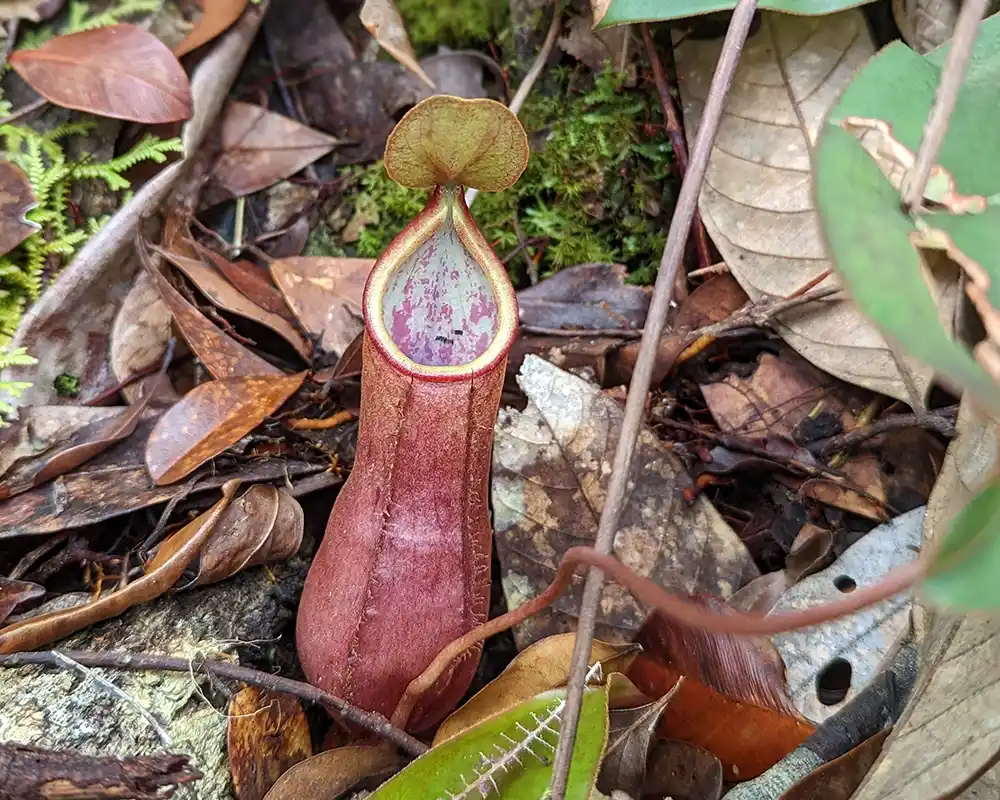
Nepenthes domei
A remarkable carnivorous pitcher plant native to Peninsular Malaysia, Nepenthes domei is known for its distinctive pitchers, which can partially bury themselves in the forest-floor humus. This unusual adaptation may help it capture crawling insects. Described as a new species in 2020, it highlights the botanical discoveries and specialised plant adaptations found within Malaysia’s tropical forests.
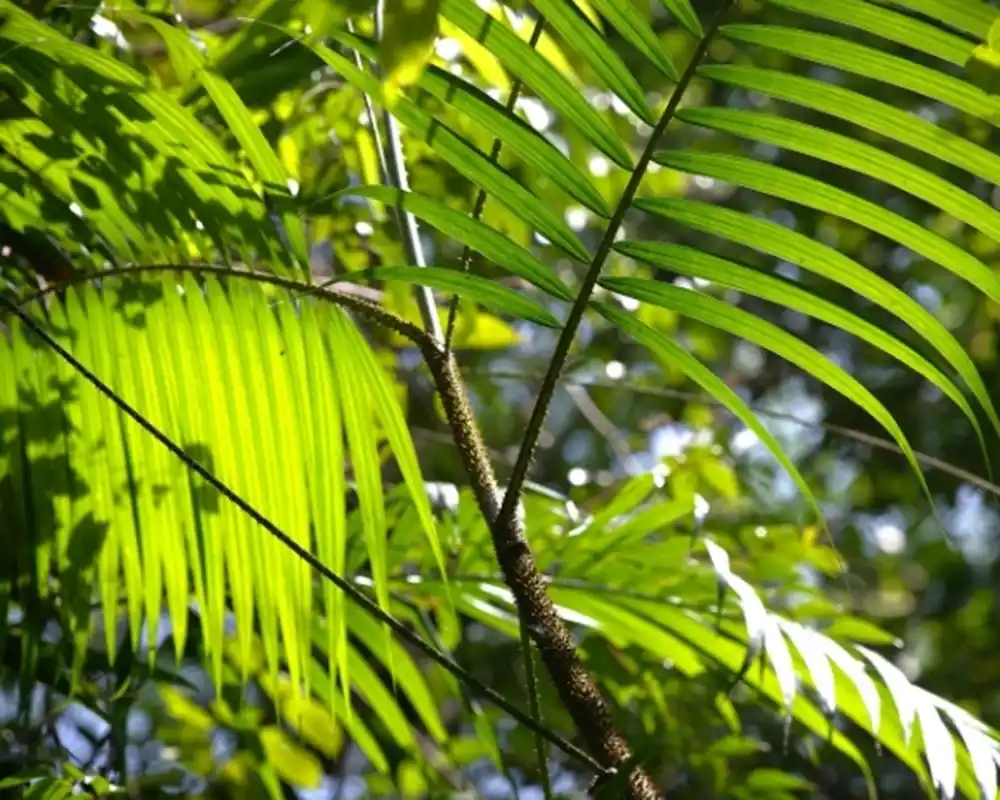
Calamus radulosus
Recorded in Peninsular Malaysia approximately 140 years ago, Calamus radulosus is a climbing palm belonging to the rattan group, reflecting the rich diversity of Malaysia’s tropical forest flora. The species was first scientifically described in 1892 based on a specimen collected in Gopeng, Perak. Like other rattans, it contributes to forest structure and habitat complexity, supporting the diverse ecological relationships within tropical forests. Its long botanical history highlights the importance of Peninsular Malaysia’s forests as habitats for native plant species that continue to warrant documentation and conservation.
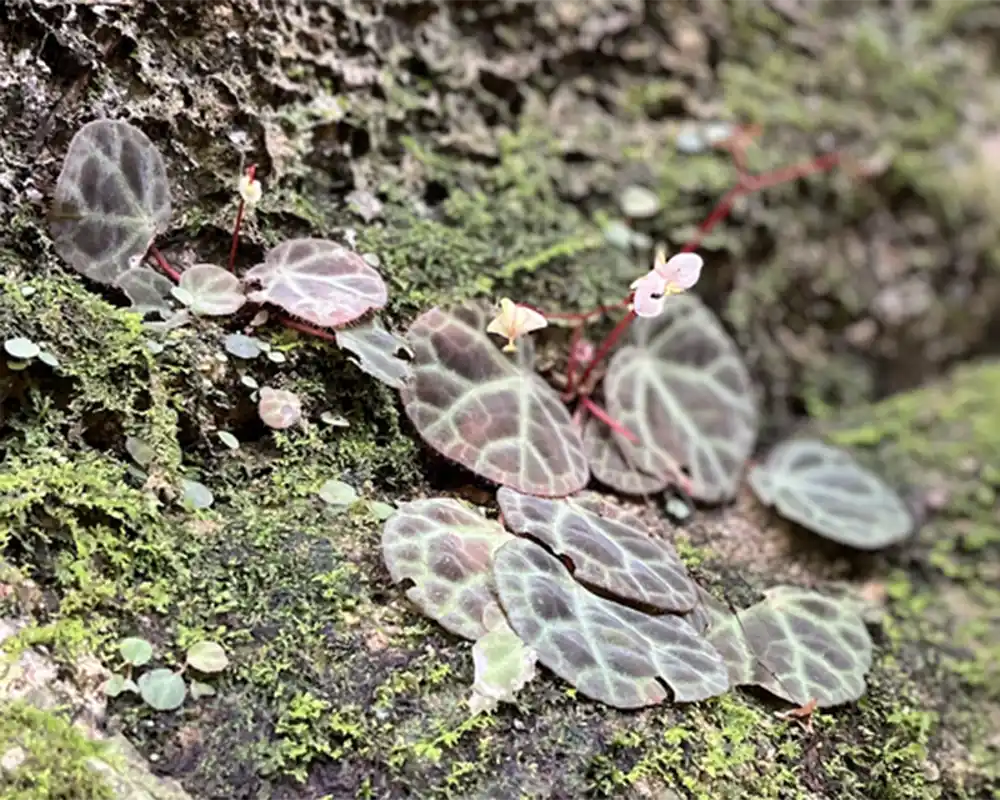
Begonia yenyeniae
The first official record of Begonia yenyeniae in the state of Pahang occurred in October 2022. Researchers discovered a new population of this rare plant inside the Gunung Aais Forest Reserve in ASARTR. Before this significant discovery, the species was believed to be endemic exclusively to a tiny region within Endau Rompin National Park in Johor. Finding it in Pahang expanded its known geographical distribution and provided vital new hope for the conservation of this critically endangered species.
Beyond Wildlife: The Value of ASARTR’s Forests
The Al-Sultan Abdullah Royal Tiger Reserve (ASARTR) is an important natural asset that strengthens climate resilience and sustains ecosystem services in Pahang and Malaysia as a whole. Its extensive forest landscapes act as natural water catchments, absorbing rainfall, replenishing streams and rivers, and helping regulate water flows that support surrounding communities and downstream ecosystems. By slowing surface runoff, stabilising soils and reducing erosion, the forest also helps mitigate flood risks and sedimentation in waterways, while its vegetation stores carbon and contributes to climate change mitigation.
Beyond these benefits, ASARTR serves as a vital biodiversity bank, safeguarding habitats, genetic diversity and wildlife populations while supporting ecological processes that keep forests healthy and resilient. These ecosystems underpin local livelihoods by sustaining freshwater resources, forest products, fisheries and opportunities for nature-based tourism and community enterprises. Protecting ASARTR is therefore not only about conserving wildlife; it is an investment in water security, disaster risk reduction, climate resilience and the long-term well-being of communities and future generations.